The bat, the pigeon, and the crows
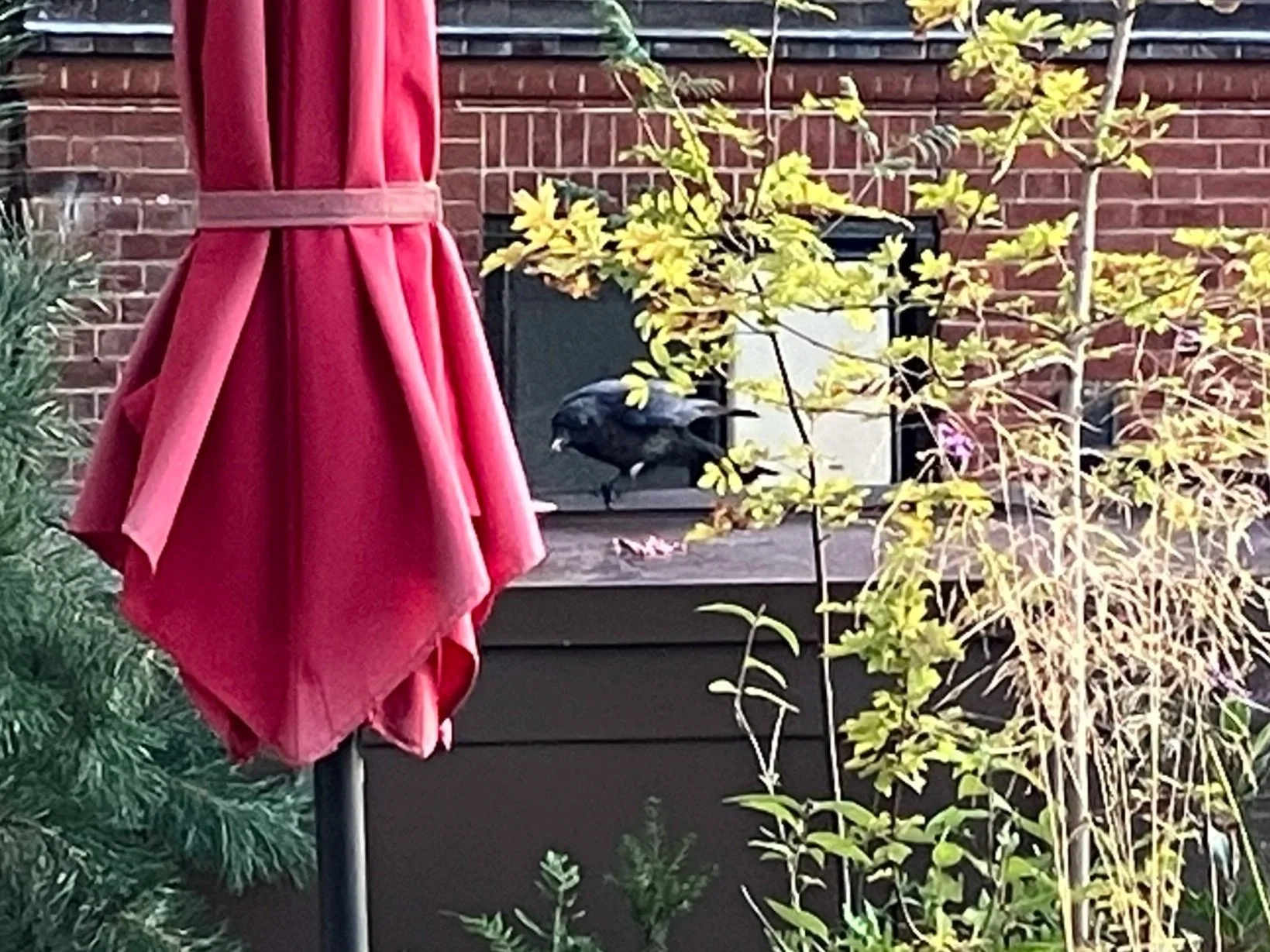
This is Blacky.
I spent yesterday using AI to learn more about our daily visitors.
The pipistrelle bat that swoops back and forth over our terrace is the same visitor each day. It spent eight minutes in the act this evening (see video). We feel honored since the total time that bats spend feeding after dusk is only 1 to 2 hours. During this time they’ll catch between a few hundred to over 1,000 tiny insects before returning to a temporary roost to rest and digest. Our visitor must be getting top pickings straight outside our living room doors. Apparently a balcony is similar to a hedgerow in that it provides a wind break and shelter to midges, moths, and beetles. I’ve recently been watering early evening and AI says that the dampness and smell is especially attractive to insects.
The wood pigeon (aka Woodie), and the carrion crows (Blacky and Blackette) have been regular visitors since early 2025. Woodie had a life mate until recently, but I fear may now be a widower. Blacky and Blackette used to do relays, taking the peanuts and suet pellets that we gave them to their nest. No longer, their kids have left and the parents now visit us separately. The birds have an arrangement, the crows get first pickings and Woodie gets anything left behind. They are comfortable in each other’s presence.
I was worried that the crows/pigeon would be scaring off smaller birds, but AI says that their common enemy, sparrowhawks, is more likely to unite them. Which is good because I heard a robin last week, and ordered feeders in the hope of attracting it to the terrace. I learned that in spring and summer, male robins sing to attract mates and defend breeding territories. Come autumn and winter, both male and female robins defend separate, individual feeding territories to ensure they have enough food to survive the cold months. Our terrace may not have enough cover for a robin to feel safe, but we’ll give it a go!
*Note, I am aware of the RSPB guidance against using flat surface feeders for birds because of the risk of disease trichomonosis. My hope is that we can use the feeder to entice the robin down onto the terrace where we have plenty of beetles, small snails, caterpillars, grubs, spiders, and ants for it to feed on. We otherwise follow the RSPG guidance and restrict feeding between May and October, and regularly clean the feeders. In practice it’s not really an issue, we’ve had few bird feeder visitors thus far.
Here’s a video of the bat swooping back and forth across the balcony:
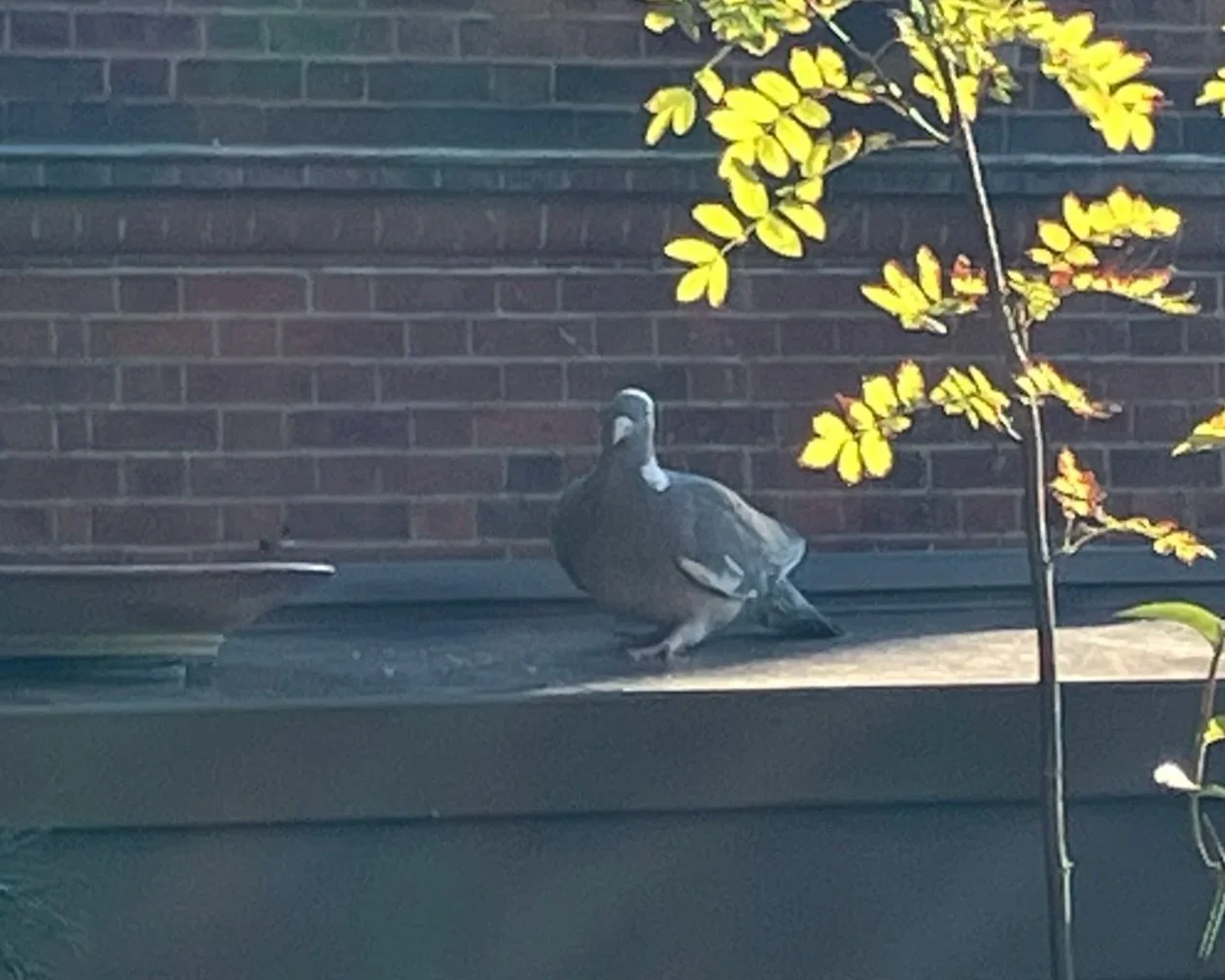
Woodie